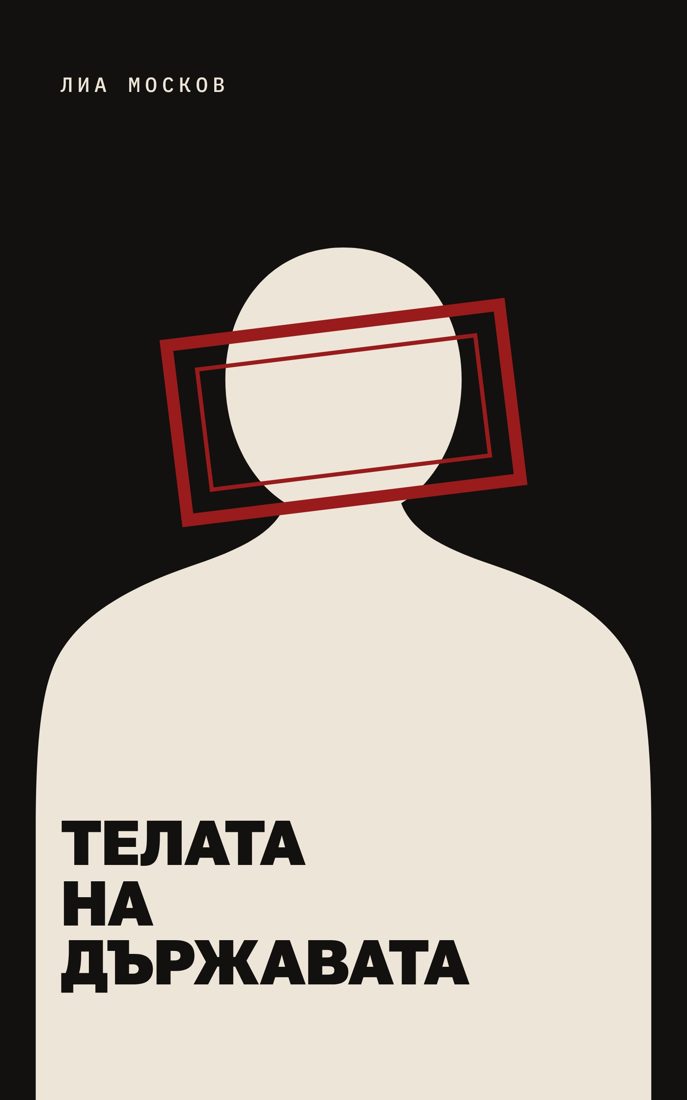
Bodies
of the
State
A history of how modern states turn biology into an instrument of power, told through Africa and the former Eastern Bloc.
Институт за социални и политически изследвания · est. 1992
ISBN 978-619-94280-0-9 · 978-619-94280-1-6
Nine chapters, two continents, one pattern: a political choice dressed up as nature.
In the summer of 1884, nine thousand Victorians paid threepence each to have their bodies measured by Francis Galton, the man who had just coined the word eugenics. They thought it a novelty. Within a lifetime the idea they had queued for, that human beings are biological facts to be read and improved by the state, would be sterilising the poor in Virginia, boxing up skulls on the Namibian coast, and drawing the maps of genocide.
Bodies of the State follows that idea across a century and two continents. It moves from Carrie Buck's operating table to the concentration camps of German South-West Africa; from the Soviet Union's secret anthrax factories to apartheid's poison laboratories; through the engineered famines of Ukraine, Biafra, Bengal and Ethiopia; into the inspected wombs of Ceaușescu's Romania and the sterilisation wards of Czechoslovakia, South Africa, India and Peru; through the sealed slums of the Ebola epidemic and the punitive psychiatric hospitals of Moscow and Pretoria; to the biometric databases of refugee camps and Xinjiang, and finally to the gene-edited embryo and the new science of inherited trauma.
In every case the pattern is the same. A political choice about whom to favour and whom to suppress, who shall be born and who shall die, is dressed in the neutral language of science, so that it looks less like a decision and more like nature. The burden falls, with grim reliability, on the people least able to refuse. And when the truth comes out, the reckoning is deferred, the perpetrators go unpunished, and the account is opened and never balanced.
Told mainly through Africa and the former Eastern Bloc, and reaching to America, China and India where the story demands it, this is a history of biology and power for anyone who wants to understand why the oldest temptation of the modern state, to mistake a body for a destiny, has never been more dangerous, or more within reach.
Nine chapters
- IThe Stock and the StateGalton's laboratory, the eugenics movement, and Carrie Buck's operating table in Virginia11
- IIThe Colony and the CampGerman South-West Africa, Shark Island, and the skulls shipped to Berlin26
- IIIThe Factory and the FrontThe Soviet anthrax programme and apartheid's poison laboratories41
- IVThe Grain and the GraveHunger as a weapon: Ukraine, Biafra, Bengal, Ethiopia54
- VThe Womb and the NationCeaușescu's inspected wombs and the sterilisation wards of four countries67
- VIThe Cordon and the CureQuarantine as politics, from the sealed slums of the Ebola epidemic81
- VIIThe Diagnosis and the DissidentPunitive psychiatry in Moscow and Pretoria94
- VIIIThe Fingerprint and the FileBiometric databases, from refugee camps to Xinjiang107
- IXThe Wound and the GeneThe gene-edited embryo and the science of inherited trauma119
- Conclusion · A Note on SourcesEvery chapter's sources, set out in a closing essay131